Sports Organics: The Clean Sweat Movement
Derek Siegel · March 25, 2026

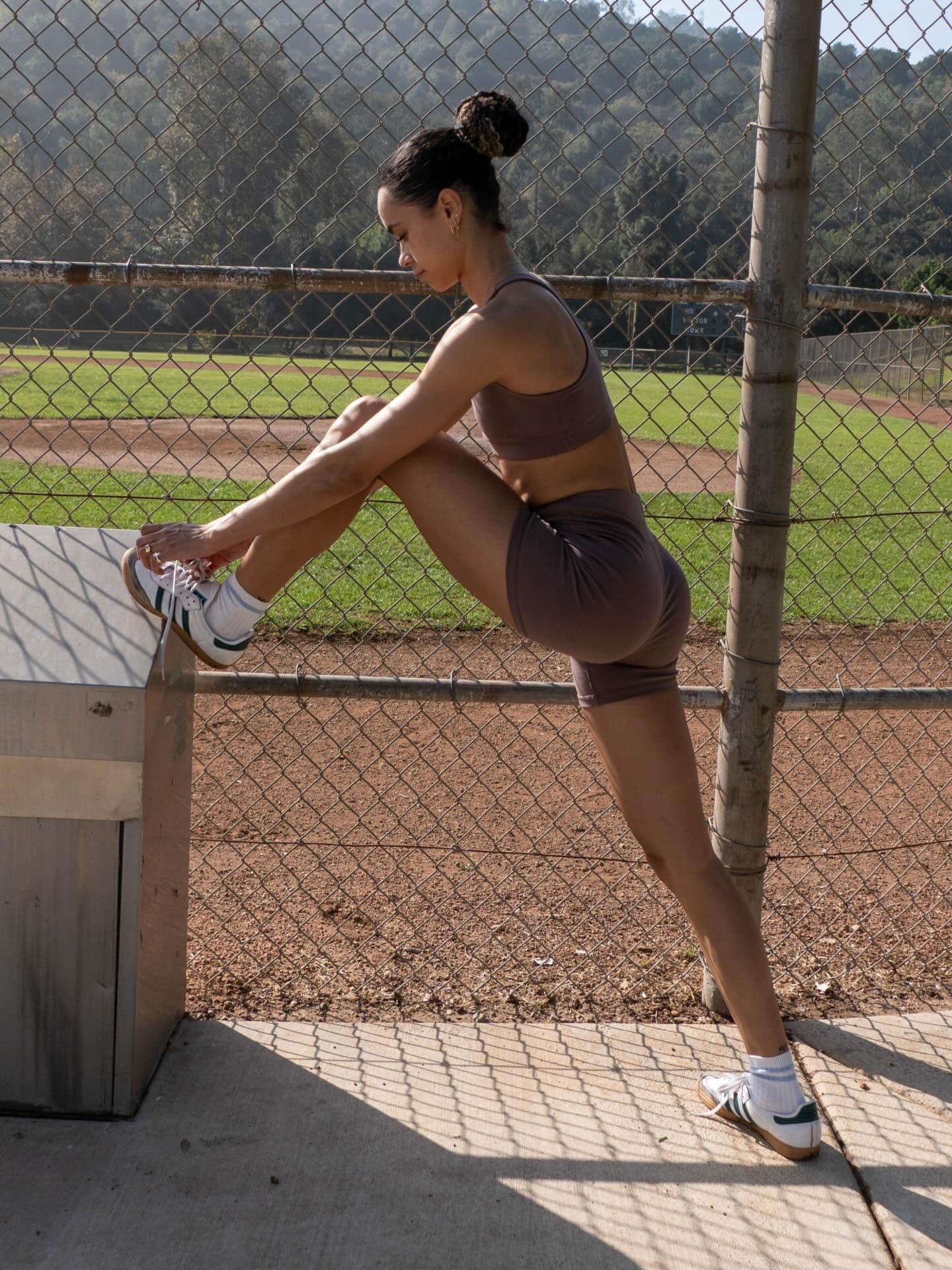
On a cool morning in the California desert, before the heat settles in, the ritual looks familiar: coffee, laces tightened, a slow stretch. But look closer and something shifts. The uniform isn’t synthetic sheen or compression gloss—it’s matte, breathable, almost understated. Cotton. Wool. Earth, not oil.
This is where Sports Organics lives—not just in product, but in moments like these.
The brand doesn’t arrive loudly. It doesn’t need to. It moves through a growing undercurrent of athletes, creators, and everyday active people who are starting to question what performance really means—and what it costs.
Origin of Organic Performance
Sports Organics was born far from the gym—deep in the California desert, shaped by years of movement through wilderness.
Founders Frank and Georgie didn’t set out to build another activewear brand. They were responding to something more instinctive: a disconnect. After a lifetime of trips into the mountains—running, hiking, sweating through heat and cold—they kept coming back to the same question:
Why wear plastic while doing something meant to make you healthier?
The answer didn’t exist. So they built one.
Sports Organics emerged from that environment—sun, dust, elevation, and long days outside—as a system for people who move often and sweat honestly, but don’t want synthetic materials on their skin. The philosophy is simple, almost obvious: nature already gives us everything we need for long-term performance.
Instead of reinventing performance, they returned to its origin.

From Performance at All Costs to Performance with Intention
In a category built on synthetics, sheen, and speed, Sports Organics is doing something quietly radical: slowing things down. Not in performance, but in material—rethinking what touches your skin when you sweat, stretch, and move through the world.
At its core, the brand is driven by a simple tension: exercise is meant to improve your health, yet most performance apparel is made from petroleum-based fabrics. Sports Organics exists to resolve that contradiction. Their mission is clear—“clean up sportswear one drop of sweat at a time.”
For years, activewear has been defined by its distance from nature. Plastics engineered to wick, stretch, compress. Effective, yes—but increasingly at odds with the very idea of health.
Sports Organics flips that equation.
Instead of asking how far materials can be pushed, the brand asks a quieter question: what happens when you work with the body, not against it?
Organic cotton that softens with sweat instead of trapping it. Merino wool that regulates temperature naturally, adapting to cold mornings and midday heat. Pieces that feel less like armor and more like a second skin—one that breathes.
It’s not about rejecting performance. It’s about redefining it.

Material as Message: The Anti-Plastic Performance Layer
Where most activewear brands lean further into technical synthetics, Sports Organics moves in the opposite direction—toward natural systems. Organic cotton. Merino wool. Materials that breathe, regulate, and return to the earth.
This isn’t nostalgia. It’s engineering.
Their organic cotton fabrics are developed for stretch and softness without compromising durability, while merino wool—lightweight and performance-tuned—offers natural thermoregulation and odor resistance. The result is gear that performs across environments: from gym floors to alpine trails, without the chemical load or microplastic fallout of conventional sportswear.

Even where compromise is required—like elastane for stretch—the brand is transparent, actively exploring bio-based alternatives instead of pretending purity where it doesn’t yet exist.
At the center of it all is material honesty.
Sports Organics builds with organic cotton and merino wool not as a branding exercise, but as a foundation. These are fibers that have existed long before performance marketing—and will exist long after.
There’s a noticeable difference when you wear them. Not just physically, but psychologically. The absence of synthetics, of chemical finishes, of that subtle artificial slickness—it changes how you experience movement.
You’re more aware of your body. Your temperature. Your breath.
Even the imperfections—slight texture, natural variation—become part of the appeal. Proof that what you’re wearing came from somewhere real.
And where compromise is still necessary, the brand doesn’t hide it. Small amounts of stretch fibers are used where needed, but always with transparency—and a clear intent to evolve beyond them.

Clean Isn’t a Trend—It’s a System
Sports Organics positions “clean” as more than an aesthetic. It’s a supply chain philosophy.
Their fabrics are certified by standards like GOTS and OEKO-TEX, signaling not just organic sourcing, but reduced chemical exposure for both wearer and maker. In a category where performance often masks environmental cost, the brand brings that cost to the surface—and works to eliminate it.
The implications extend beyond the individual garment. Synthetic sportswear can persist in landfills for centuries, shedding microplastics long after it’s discarded. Natural fibers, by contrast, break down over time—closing the loop rather than compounding the problem.

Designed for Movement, Not Just Metrics
Despite its ethos, Sports Organics isn’t a “lifestyle” brand masquerading as performance. The pieces are field-tested—on runs, hikes, lifts, and long days in motion.
The design language is minimal and grounded: high-waisted compression shorts, merino tees, organic cotton bras. No excess, no overbuilt features. Just essentials refined to move, breathe, and endure.
It’s gear that transitions seamlessly—from workout to coffee, from trail to travel—mirroring a broader shift away from hyper-specialized athletic wardrobes toward something more integrated, more human.

A Different Kind of Sports Club
Sports Organics hints at something larger than product—an “Organic Sports Club” that feels less like a membership and more like a mindset.
A loose network of people who see movement not as performance theater, but as daily grounding. Who value how things are made as much as how they function. Who understand that what touches your skin matters.
It’s early, but the signals are there: a brand evolving into a community, shaped as much by its wearers as its designers.

Sports Organics is building a culture around movement—not performance as spectacle, but as daily ritual. Their “Organic Sports Club” hints at a broader ecosystem: community, storytelling, and an evolving dialogue around how we move and what we wear while doing it.
It’s less about elite output and more about consistent engagement—what the brand calls being “clean, happy, sweaty.”

The Future of Performance is Natural
Sports Organics sits at the intersection of two rising currents: performance wear and clean living. But instead of layering sustainability onto an existing model, it rebuilds the model itself—starting with fiber.
In doing so, it raises a larger question for the industry: if performance can be achieved without plastic, why isn’t it the standard?
For now, Sports Organics remains a small, focused collection. But its ambition is bigger than product. It’s a reframing of what performance means—not just how far you run, but what you leave behind.

It’s not trying to outpace the industry. It’s trying to outlast it.
Because the future of performance may not be about more technology, more synthetics, more speed.
It may be about returning—to simpler systems, better materials, and a deeper connection between what we wear and how we move.
And if that’s the case, Sports Organics isn’t just part of the conversation.
It’s quietly leading it.
Shop Sports Organics’ plastic-free line on OU today.